
The Ultimate Guide to Hair Transplant – What to Expect, Procedure, and Recovery
Introduction: Why Hair Transplant is in Demand
Hair loss is a common concern affecting millions worldwide. Whether it’s due to genetics, aging, or health conditions, hair loss can have a significant impact on a person’s confidence and self-esteem. A hair transplant is one of the most effective and permanent solutions to restore natural hair growth. With advancements in technology and techniques, hair transplants have become more accessible and offer natural-looking results.
Who is an Ideal Candidate for a Hair Transplant?
Not everyone is suited for a hair transplant. Ideal candidates are individuals experiencing permanent hair loss, typically male pattern baldness or female pattern thinning. It’s essential to have sufficient donor hair at the back or sides of the head to achieve successful results. A thorough consultation with a specialist helps determine eligibility and the best approach for each individual.
Types of Hair Transplant Techniques (FUE vs FUT)
There are two primary techniques used in hair transplantation:
- FUE (Follicular Unit Extraction): Involves extracting individual hair follicles and transplanting them to the bald area. It leaves minimal scarring and offers a quicker recovery.
- FUT (Follicular Unit Transplantation): A strip of scalp is removed, and follicles are harvested from it. This method may be more suitable for extensive hair loss but leaves a linear scar.
Step-by-Step: What Happens During the Procedure
- Consultation and Planning: Includes scalp analysis, determining the number of grafts needed, and setting realistic expectations.
- Preparation: Donor area is trimmed, and local anesthesia is administered.
- Extraction: Hair follicles are harvested using FUE or FUT.
- Graft Preparation: Follicles are cleaned and sorted.
- Implantation: Grafts are implanted in the recipient area with precision to match natural growth direction.
Recovery Timeline: What to Expect Post-Surgery
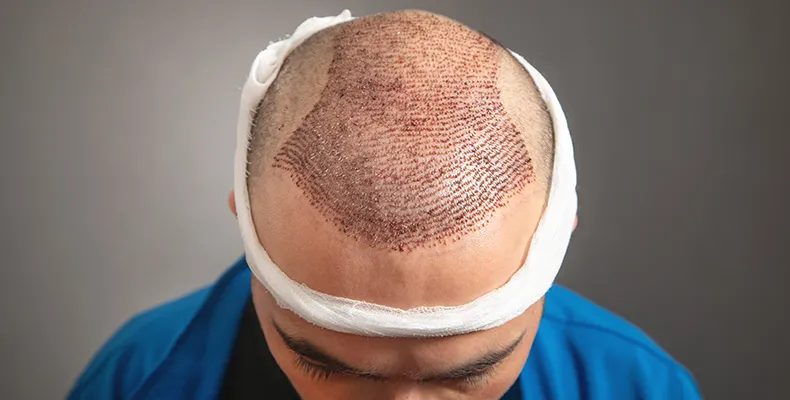
Post-surgery, patients may experience mild swelling and discomfort. Tiny scabs form around implanted grafts, which fall off in 7-10 days. Shedding of transplanted hair (shock loss) occurs within a month, followed by gradual hair regrowth. Significant results are typically visible within 6 to 12 months.
Results: When Will You See New Hair Growth?
New hair begins to grow around the third month. Full results, including thickness and coverage, can be seen between 9 to 12 months post-procedure. The transplanted hair grows naturally and can be cut, styled, or shaved.
Cost Factors and Considerations
Hair transplant costs vary based on the number of grafts, technique used, clinic reputation, and surgeon’s expertise. While it may seem like an investment, the long-term results and confidence boost are invaluable.
Why Choose Manas Aesthetic Center for Hair Transplant?
Manas Aesthetic Center offers personalized hair transplant solutions using the latest technology and experienced surgeons. From consultation to aftercare, we ensure patient comfort, safety, and satisfaction.
FAQs About Hair Transplant
- Is the procedure painful? No, it’s performed under local anesthesia.
- Will the results look natural? Yes, when done correctly, the results are undetectable.
- Are there any risks? As with any procedure, there are minor risks like infection or scarring, but these are rare with proper care.
Final Thoughts: Regain Your Confidence with Natural-Looking Hair
A hair transplant can be life-changing. With the right clinic and realistic expectations, it offers a permanent, natural solution to hair loss